Tuesday, December 12, 2017

Skating Book for the Holidays: Maddie Takes the Ice

Maddie Takes the Ice
Madison Albright is one of the most confident skaters at the Arctic Circle Figure Skating Club, but the pressure builds as she prepares for the regional championship. A jealous skater is prepared to do whatever it takes to knock Madison from the competition and an old friend turns against her just when she needs her the most. Strangers and classmates alike suddenly make her the center of attention. Her coach seems incapable of understanding her worries. Her best friend is preoccupied with boy problems. At home, her family expects a big win. In the final days before the event, her confidence begins to unravel and she struggles to succeed in spite of the stress and strain that is competitive figure skating. Come along for an unforgettable journey as Maddie Takes the Ice.


Curly Lambeau of Notre Dame Football

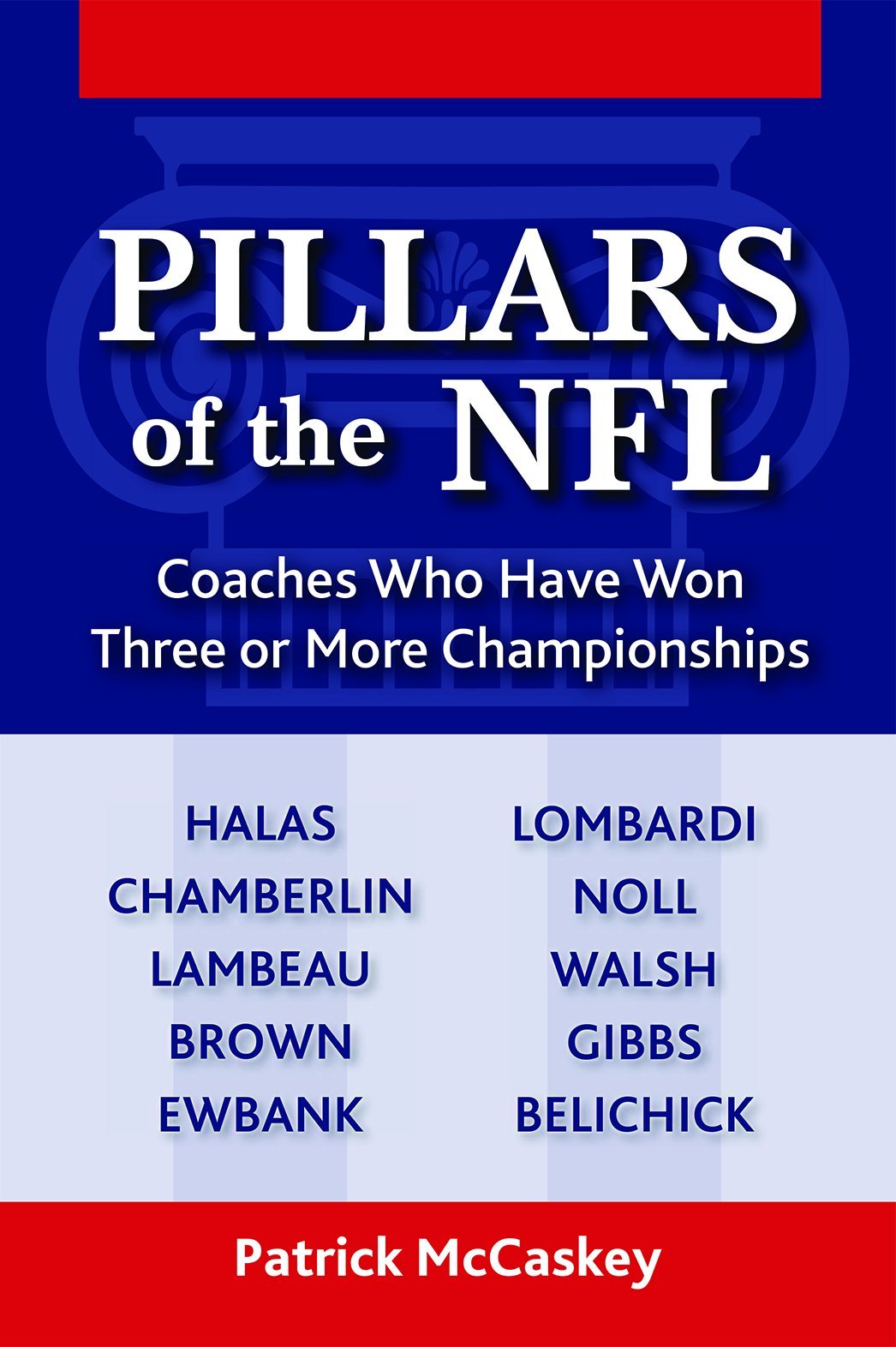
Pillars of the NFL, Sporting Chance  Press Publisher
Chicago Bears Senior Director Patrick McCaskey's Pillars of the NFL, examines the football lives of the 10 greatest coaches in NFL history--those who won three or more championships.  One of the most interesting "Pillar" is Curly Lambeau.  Many football fans do not realize that Lambeau had interesting connections to some of the Notre Dame legends although he only attended the school for one year. 

In 1918, Lambeau shared the backfield with George “Gipper” Gipp, the storied back who would lead the team in both rushing and passing from 1918-1920.  Lambeau played under new head coach, Knute Rockne.  During Lambeau’s stay in South Bend, World War I was raging, but it was a flu epidemic that shortened the football season.  Notre Dame posted a 3–1–2 record.  In one tough game against the Great Lakes Naval Station, Lambeau faced future rival and Chicago Bears founder, George Halas, who played end.  The teams tied.  

As a freshman, Lambeau had a supporting role in the Notre Dame backfield.  He was no threat to superstar Gipp who among other astonishing feats, held the ND rushing career mark of 2,341 yards for more than 50 years. 

The Fighting Irish player roster described Lambeau as flamboyant, an excellent blocker, and a good short-yardage runner. After the football season, Lambeau had a bout of tonsillitis.  Recuperating at home, he decided not to return to South Bend, and subsequently quit school for good.  Although Lambeau had a brief career at Notre Dame, he would be called an “ex Notre Dame Football star.”  He was proud of the connection.  Lambeau did not forget Rockne.  

Lambeau’s practice of recommending Green Bay players to his old coach created yet another Notre Dame legend.  One player who would go to Notre Dame on Lambeau’s recommendations was Jim Crowley.  Crowley would become one of the fabled Four Horsemen of Notre Dame—christened and made famous by Grantland Rice, a poetic sportswriter for the New York Herald-Tribune in an era when such craft was appreciated.   


Crowley “recovered” from the notoriety and later coached at Fordham University.  At Fordham, Lambeau’s work would come full circle.  One of Crowley’s players by the name of Vince Lombardi would go on to coach the Packers in one remarkable decade.  

Copyright, Sporting Chance Press

Wednesday, November 8, 2017

LAMBEAU, NOTRE DAME AND THE PACKERS IN PILLARS OF THE NFL

PILLARS OF THE NFL
In Patrick McCaskey's  Pillars of the NFL, the lives and careers of the top ten NFL coaches and their teams are examined.  The material below is reprinted from Pillars, Copyright Sporting Chance Press.

In 1918, Lambeau attended Notre Dame where he rubbed shoulders with future college football legends.  At Notre Dame, Lambeau shared the backfield, albeit for a single season, with George “Gipper” Gipp, the storied back who would lead the team in both rushing and passing from 1918-1920.  Lambeau played under new head coach, Knute Rockne.  Like Lambeau, Rockne was a fan of the pass and in South Bend, Lambeau learned the Notre Dame box, a formation based on the commonly used single wing. ...

During Lambeau’s stay in South Bend, World War I was raging, but it was a flu epidemic that shortened the football season.  Notre Dame posted a 3–1–2 record.  In one tough game against the Great Lakes Naval Station, Lambeau faced future rival and Chicago Bears founder, George Halas, who played end.  The teams tied.  

As a freshman, Lambeau had a supporting role in the Notre Dame backfield.  He was no threat to superstar Gipp who among other astonishing feats, held the ND rushing career mark of 2,341 yards for more than 50 years.  Tragically, after his senior season, Gipp developed a strep infection and died.  On his deathbed, Gipp’s last conversation to Rockne was quoted as:

I've got to go, Rock.  It's all right.  I'm not afraid.  Some time, Rock, when the team is up against it, when things are wrong and the breaks are beating the boys, ask them to go in there with all they've got and win just one for the Gipper.  I don't know where I'll be then, Rock.  But I'll know about it, and I'll be happy.

Rockne would famously use the deathbed story to motivate his underdog Notre Dame team against Army in 1928.  The quote would also make its way into movies and politics. 
The Fighting Irish player roster described Lambeau as flamboyant, an excellent blocker, and a good short-yardage runner. After the football season, Lambeau had a bout of tonsillitis.  Recuperating at home, he decided not to return to South Bend, and subsequently quit school for good.  Although Lambeau had a brief career at Notre Dame, he would be called an “ex Notre Dame Football star.”  He was proud of the connection.  Lambeau did not forget Rockne.  The two corresponded and Lambeau occasionally recommended a high school player to the Notre Dame coach and he encouraged the student to head to South Bend.  

Lambeau’s practice of recommending Green Bay players to his old coach created yet another Notre Dame legend.  One player who would go to Notre Dame on Lambeau’s recommendations was Jim Crowley.  Crowley would become one of the fabled Four Horsemen of Notre Dame—christened and made famous by Grantland Rice, a poetic sportswriter for the New York Herald-Tribune in an era when such craft was appreciated.   


Four Horsemen of Football, Library of Congress Photo


After Notre Dame's 13–7 victory over Army on October 18, 1924, Rice penned one of sports journalism’s favorite passages:

Outlined against a blue, gray October sky the Four Horsemen rode again. 
In dramatic lore they are known as famine, pestilence, destruction and death.  These are only aliases.  Their real names are: Stuhldreher, Miller, Crowley and Layden.  They formed the crest of the South Bend cyclone before which another fighting Army team was swept over the precipice at the Polo Grounds this afternoon as 55,000 spectators peered down upon the bewildering panorama spread out upon the green plain below.
Notre Dame student-publicity aid, George Strickler, who would become the sports editor of the Chicago Tribune, had a photo shot of the four ND players on horseback, which was picked up by newspapers across the country.  The photo memorialized the passage, the players, and the team.  

Crowley “recovered” from the notoriety and later coached at Fordham University.  At Fordham, Lambeau’s work would come full circle.  One of Crowley’s players by the name of Vince Lombardi would go on to coach the Packers in one remarkable decade.  


Wednesday, October 18, 2017

Curly Lambeau Ready to Conquer the World: From Pillars of the NFL by Patrick McCaskey of the Chicago Bears

This post was published in the Lambeau Chapter of Pillars of the NFL by Patrick McCaskey and it is Copyright Sporting Chance Press:


Ready to conquer the world 


It is 1929, the year of the stock market crash and the beginning of the Great Depression. Earl Louis Lambeau, the Green Bay player-coach, has other things on his mind right now. He stands out on a no frills practice field in Green Bay and barks out instructions to his team. The cold autumn wind whips through the dark wavy hair that has given him the moniker, Curly. He is 5-foot-10, handsome, and built like a prizefighter. He can still play football, but he will only cross the sideline in uniform in one game this season. Lambeau is restless, competitive, and perhaps more than anything, he is confident in everything he does. Football is a fitting game for him. It is a man’s game—something made for his temperament. It is a game that intrigues and challenges him—a channel for his endless energy. 

Lambeau’s temper flares as he looks at a player who is not following his instructions. He approaches the man and shouts out directions that he gave a few minutes ago—this time with exaggerated gestures. He is not the most patient “teacher.” He was not the most patient student either. In fact, he dropped out of two different colleges a decade ago and made no plans to go back. Laumbeau has intelligently built a team of excellent athletes over the past eight seasons in the National Football League.

He is a much more mature coach now at 31 years old than when he started. There is no college draft yet in the NFL, so Lambeau talks to whomever he wants coming from the college ranks. It has not been easy, but Lambeau is persuasive. He ably recruits players for Green Bay, a relatively small Midwestern city that is known for iron smelting, papermaking, lumber milling, manufacturing, and to some extent, meatpacking. It is a place that does the difficult. 

Some players prefer the college-like atmosphere of Green Bay and its small town feel. Green Bay has been a good place for jobs, but its population is less than 40,000. It is a tough place to live in December, January, and February when the average low temperature is under 20° and it often trails off below zero. Over 50 inches of snow routinely bury the town each year. The hard-scrabbled citizens that include many immigrants, and sons and daughters of immigrants, do not complain about the weather in Green Bay. They are hardworking people who support Lambeau and his team. In fact, the people in the community have come to own the team through stock purchases and they sustain it by attending games in great number. The newspapers praise Lambeau. The community is fond of him. The team itself is a different story. 

Coaches are not necessarily loved by their players. Lambeau motivates his men by almost any means. He threatens. He intimidates. He is quick to release any man who cannot help the team any longer. He insists on physical conditioning. He has no patience for players who are out of shape or who do not listen. But, he can manage difficult players as well as anyone in football when they are critical to the team’s success. Some players do not like him. Others do not respect him. But most are confident that he will get more out of these Packers than anyone else on the planet. 

Lambeau is a coach who takes his wins and losses personally. He can be miserable for days before a big game and even more miserable if they lose. He can be exuberant after a win, when he often tells his players in post game: “The lid’s off tonight boys, just don’t get arrested.” Coaching, like life, can be tenuous. If Lambeau’s coaching career came to an end on this cold day in 1929, the Packers might fade away as so many other early small-market teams have done. Green Bay may have remained a relatively quiet Wisconsin town—a good town where industry flourished and workers went about their business, but a town of no special note nationally. But Lambeau sticks it out and his Packers are on the threshold of winning three championships in a row. 

Under Lambeau, the Packers will win six championships overall. In a few months and continuing for years, the national media will report on a fascinating “David and Goliath” story—little Green Bay beating the big city teams. Green Bay will become famous all over the world and Curly Lambeau will become its first superstar. But today’s practice is not about notoriety or glory, fame or fortune; it’s about a local man coaching a group of men on a cold day and giving them a sense of potential and purpose with a dash of promise. 


Each chapter in Pillars of the NFL starts out with a "you are there" feature that brings to reader into the world of the coach. This $30 book is now (10/18-17) available on Amazon for just $18.  Not sure how long this will last, so order  now!

Tuesday, October 17, 2017

Frankford Yellow Jackets Section from Pillars of the NFL by Patrick McCaskey of the Chicago Bears

Pillars of the NFL
This post was published in Pillars of the NFL by Patrick McCaskey and is Copyright Sporting Chance Press:


Frankford Yellow Jackets 


[Guy] Chamberlin moved on to play and coach the Frankford Yellow Jackets for the 1925 and 1926 seasons. The Yellow Jackets played from 1924-1931. Frankford itself is a neighborhood in northeast Philadelphia. Chamberlin settled into the area, rented a home, pitched for the American Legion in the baseball season, and worked as a truck driver in the off season. 

Pennsylvania’s blue laws prohibited professional football on Sundays so the Yellow Jackets would often schedule two games on the same weekend, a Saturday home game and a Sunday away game. 

1925 Frankford Yellow Jackets’ Season 


In 1925, the NFL was a bloated 20-team league. Scheduling was seriously out of sync. The Yellow Jackets played 19 games while the Duluth Kelleys played just three. Five teams did not win a game all season. 

The Yellow Jackets had an excellent first half of the season winning 9 of 10 games and then fell apart in the second half winning 3 and losing 6. It is likely that their heavy schedule contributed to the lapse in the second half of the season. Before their swoon, they beat the Pottsville Maroons, 20–0, on November 14. Two weeks later, Pottsville destroyed the Yellow Jackets, 49–0. They did not play the Chicago Cardinals who took the championship with a record of 11–2–1. Pottsville was runner up with a 10–2–0 record. 

1926 Frankford Yellow Jackets’ Season 


Guy Chamberlin brought it all together for the Yellow Jackets in 1926. The Yellow Jackets had another exhausting schedule. They played 17 games. They scored 236 points and allowed 49 from their opponents. There was a kind of perfect symmetry to their season record. They tied the first and last game of the season and lost game 8 to the Providence Steam Roller 7–6. They won every other game on their schedule to end at 14–1–2 for the Championship. 

On December 4, 1926, with the Yellow Jackets holding a 12–1–1 record, they played the key game of the season against the Chicago Bears who held a 12–0–3 record. For the first three quarters, the offenses struggled to get into scoring position. In the third quarter, the Bears finally got close enough for a Paddy Driscoll field goal attempt. It was blocked by Guy Chamberlin. 

In the fourth quarter, the Bears’ halfback, Bill Senn, cut loose for a 62-yard touchdown run. Chamberlin blocked the extra point attempt. The Bears held a 6–0 lead as time was pulling away from Frankford. With one last run at the end zone, Chamberlin’s Yellow Jackets moved down field on the strength of a long pass play. Then, Houston Stockton hit his tiny 5-foot-5 back, Henry “Two Bits” Homan, who caught the ball and crossed into the end zone for a score. Frankford’s Tex Hamer kicked the extra point for the win. 

On November 29, 1926, Raymond Hill of the Philadelphia Evening Bulletin described Chamberlin and his play: … consistent performer all year…a brainy player and wide-awake on the field….He has been performing life saving feats for the Jackets all year, besides getting down fast under punts, grabbing passes and breaking up end runs…his play is one of the main reasons for Frankford being up in the fight.

Pillars of the NFL is available from Amazon. 


1934 Season and Sneakers Game from Pillars of the NFL by Patrick McCaskey

This post was published in the front matter of  Pillars of the NFL by Patrick McCaskey and is Copyright Sporting Chance Press:

Illustration from Pillars of the NFL
Copyright 2014 by Bill Potter

1934 Season and Sneakers Game


Before the season started, the Bears played in the first Chicago College All Star Game. Before 79,432 fans at Soldier Field, the game ended in a 0–0 tie. It was not a sign of things to come for Halas’s team. 

The Bears looked unbeatable in 1934 when they went 13–0 for the season. Halas had added a new halfback, Beattie Feathers, who rushed for 1,004 yards that season. The Bears won 18-straight games and were dominating the league. 

The championship game was one for the history books, or perhaps Ripley’s Believe It Or Not. The Bears played the Giants in the Polo Grounds. The night before the game, a storm dumped freezing rain and sleet onto the field. Abe Cohen, who served part-time in the Giants’ locker room and part time in Manhattan College’s locker room, was asked to head over to the school and borrow their basketball sneakers to help the Giants improve their footing. 

On icy field conditions, the Bears took a 13–3 lead before Cohen hopped out of a cab with a supply of basketball shoes. The Giants changed from cleats to sneakers and were able to outmaneuver the Bears. The sneakered team scored 27 unanswered points for a 30–13 win. 

The game is called the “Sneakers Game.” Rather than bemoan the unfair advantage in equipment, Halas would remember the game for the freaky weather change and the sheet of ice on the field.

In Pillars, each chapter is devoted to one of the 10 greatest coaches in NFL history.  Each chapter includes various sections and special attention is given to Championship seasons and games.


Halas’s Players from Pillars of the NFL by Patrick McCaskey

This post was published in Pillars of the NFL by Patrick McCaskey and is Copyright Sporting Chance Press:


Halas’s Players 


Halas had seen many of the top players in action himself. He also traveled to see others in whom he was interested. As professional football developed, Halas continued to look out for good recruits. He was drawn to tough competitive men who played aggressively. 

Abe Gibron 
One of Paul Brown’s best guards on the early 1950s Cleveland championship teams, Abe Gibron, was 5-foot-11, but he weighed 250 pounds. He was a force—quick off the ball and a strong blocker who played for the Bears in 1958-1959. He would be hired back to coach the Bears from 1972-1974. 

Beattie “Big Chief” Feathers 
In his first year with the Bears in 1934, halfback Beattie Feathers became the first player to rush for over 1,000 yards. Feathers injured his shoulder early in his career and some believe that the injury kept him from having a Hall of Fame career.

Bill George 
Bill George played the middle guard position when he joined the Bears in 1952. On pass plays, the middle guard would make contact with the offensive center and then drop back and cover. George decided that on a passing play, he would drop back before the play was underway. In this way he was able to fill the space better and disrupt the shortest of passes in the middle. Essentially, George’s middle guard position morphed into the middle linebacker position. Hall of Famer George had all the skills to cover a huge part of the field, defend against the pass and the run, pursue plays to the outside, and play with an aggression and force that became the prototype for others who followed him—Butkus, Singletary, and Urlacher. George played for the Bears from 1952-1965. 

Bill Hewitt 
Bill Hewitt, Hall of Fame end, played for the Bears from 1932-1936. Exceptional on both offense and defense, when the Bears had the ball in critical situations, Hewitt especially enjoyed trick plays that fooled unsuspecting defenders. 

Bill Osmanski 
Bears’ first round draft choice in 1939, Bill Osmanski, was one of the best fullbacks in the league. Off to the war in 1944-1945, Osmanski returned for the 1946-1947 seasons before he retired. 

Bill Wade 
Bill Wade was the Bears’ quarterback during the early to mid 1960s and a teamleader throughout his tenure in Chicago. Although a leading passer in many categories in 1961 and 1962, Wade and the Bears played a very conservative, mistake-averse game in their championship run in 1963. Bob Wetoska Bob Wetoska played tackle for the Bears during the 1960s. At 6-foot-3 and 240 pounds, Wetoska was a natural guard, but he played tackle most of the time. He created holes for Gale Sayers and pass blocked for Bill Wade.  

***
In Pillars, each chapter is devoted to one of the 10 greatest coaches in NFL history.  Each chapter includes various sections like "Halas's Players" in part reproduced here, which provides a representative sampling of the men who served under the great coach.